Building Community, Not Just Collecting Assets
What changes when residents help decide what happens to their building, from rent and repairs to the businesses that share the block?

Give the people who live there a real vote
A building is an asset on somebody’s balance sheet and a home to everyone who lives there. A roof leak, a rent increase or a change in how the ground floor is used can look entirely different depending on which side of the transaction you are on.
Collective ownership opens a way to bring those perspectives into the same decision. A real estate DAO can pool capital and give residents or other members rights to make proposals, examine the budget and vote. Those rights come from the governance rules. A resident with a small financial stake can still have a meaningful voice if the rules protect it.
Follow the money through an ordinary decision
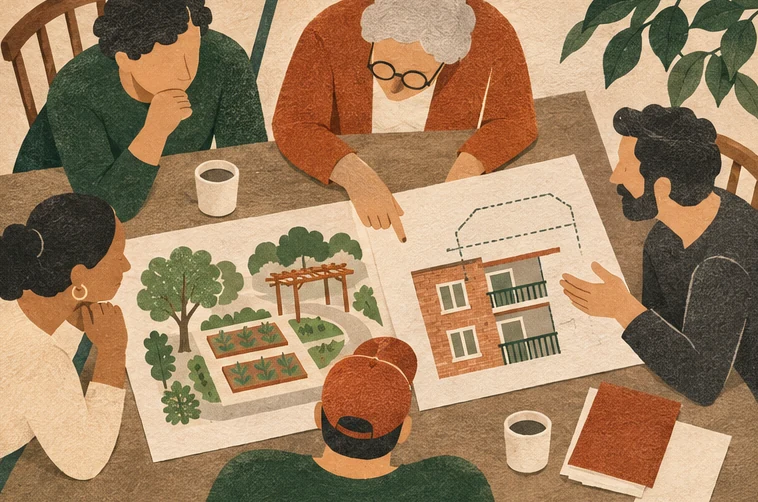
Suppose residents propose converting a vacant corner of the property into a shared garden. Someone prices the work. Members see what the project will cost and what it would take out of reserves. The proposal goes to a vote, with the approval and any payments recorded in a place members can inspect. Exactly who signs contracts and releases funds should be clear before voting starts.
Apply that same discipline to a bigger question such as rent. Members can examine the cost of upkeep and agree on reserves, repairs and any price changes. That makes trade-offs visible. It also gives tenants a chance to defend predictable housing costs while investors explain what the building needs to remain viable.
Keep value circulating in the neighborhood
Longer tenancies can give families time to build the relationships that sustain schools and local organizations. A building can buy supplies from nearby businesses, lease retail space to a neighborhood entrepreneur or use open space for childcare and recreation. Each choice has a cost and a beneficiary. Members deserve to know both.
A cooperative structure takes practice. People need time to learn the rules, resolve disagreements and decide what to do when money is tight. The strength of the model shows up in those ordinary moments, when the people who take care of a place have the authority to help shape it.