Sharing Resources and Closing Loops: The Intersection of the Sharing Economy and the Circular Economy
Sharing makes an item useful to more people. A circular economy asks how to keep that item working and recover its value when it wears out.
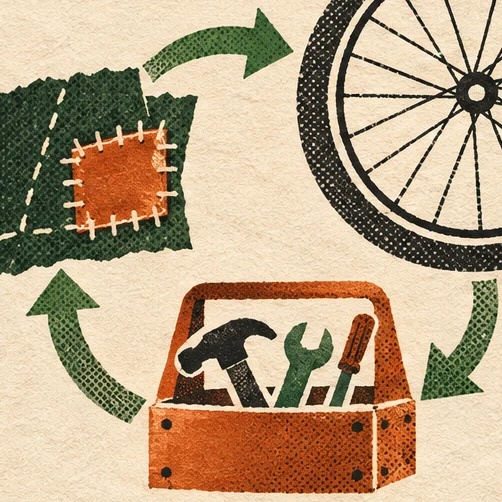
Put idle things back to work
A drill might have years of useful life and spend most of them in a closet. A tool library gives people a way to use it as they need it. A well-run library also checks it back in, replaces parts and explains how to work with it safely. Those tasks determine whether wider use extends the item’s life or simply wears it out faster.
The circular economy is concerned with designing goods and services for reuse, repair and recovery. Combine that design with shared access and a neighborhood can make a small supply of goods go further. Think about clothing repair, reusable containers or a bike-share fleet built from models with replaceable parts.
Decide who can use the system
A service can be efficient from the operator’s perspective while leaving customers with a long trip, a deposit they cannot afford or a reservation process they cannot use. A bicycle or car-share program needs to look at where vehicles are staged and whose trips it serves. A repair program needs access to parts and people with time to do the work.
The best measure joins both ideas. Can more people meet a need, and can the same materials stay in useful service longer? If the answer to either is unclear, there is a design problem to solve before the model scales.